

Why we do not top trees
Topping, cutting the main limbs back to stubs, is the fastest way to ruin a tree. It forces weak, fast-growing shoots that break in storms, invites decay into the cuts, and leaves an ugly silhouette. When a tree is genuinely too big for its spot, we use crown reduction: cutting back to a healthy lateral branch so the tree keeps a natural shape and seals its wounds. If reduction is not enough, we will say so and talk honestly about removal.
When to trim
Most trees in our area are best pruned in the dormant season, late fall through early spring, when the structure is visible and disease pressure is low. Maples and birches bleed sap when cut in late winter, so we prune them in summer. Oaks should not be pruned from April through July to avoid oak wilt. Fruit trees are pruned in late winter. Dead wood can come out any time of year, and storm damage should not wait.
What good pruning looks like
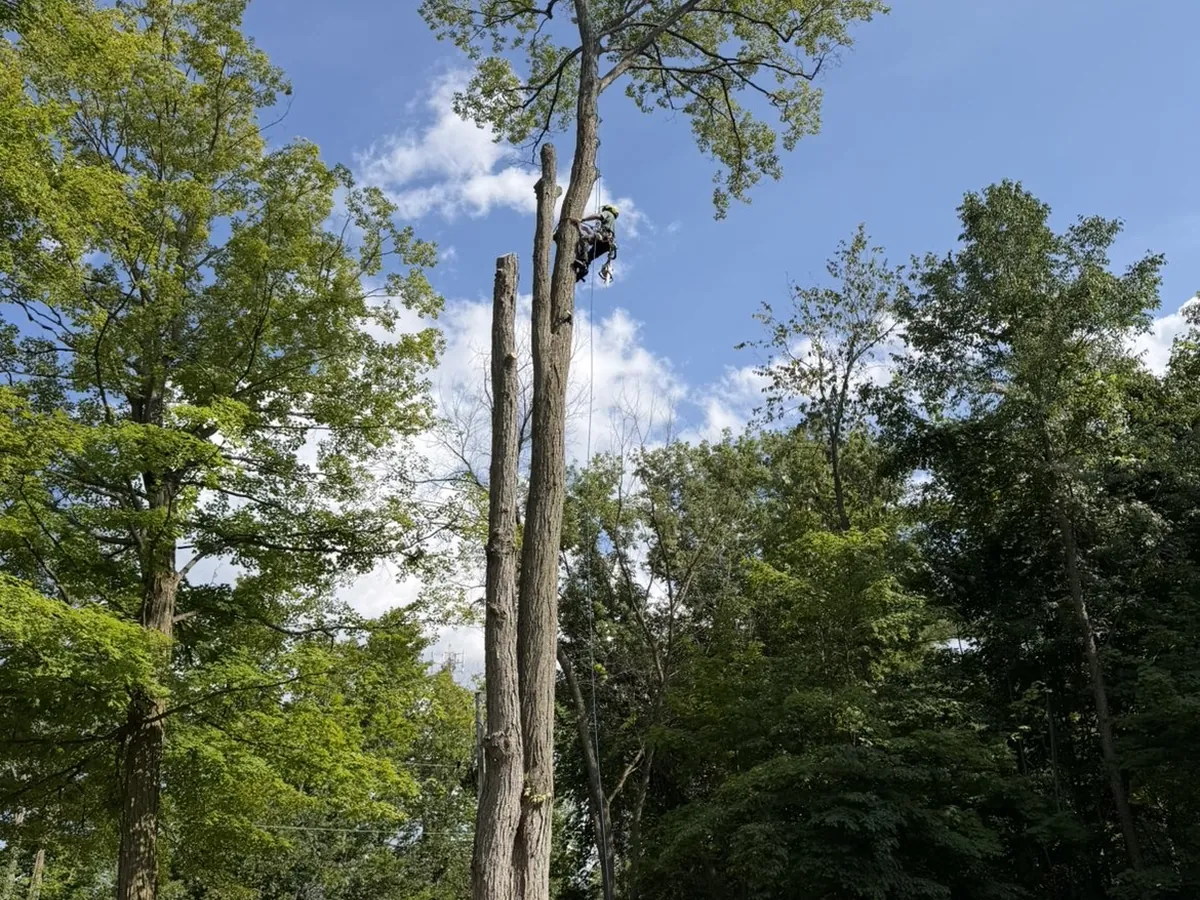
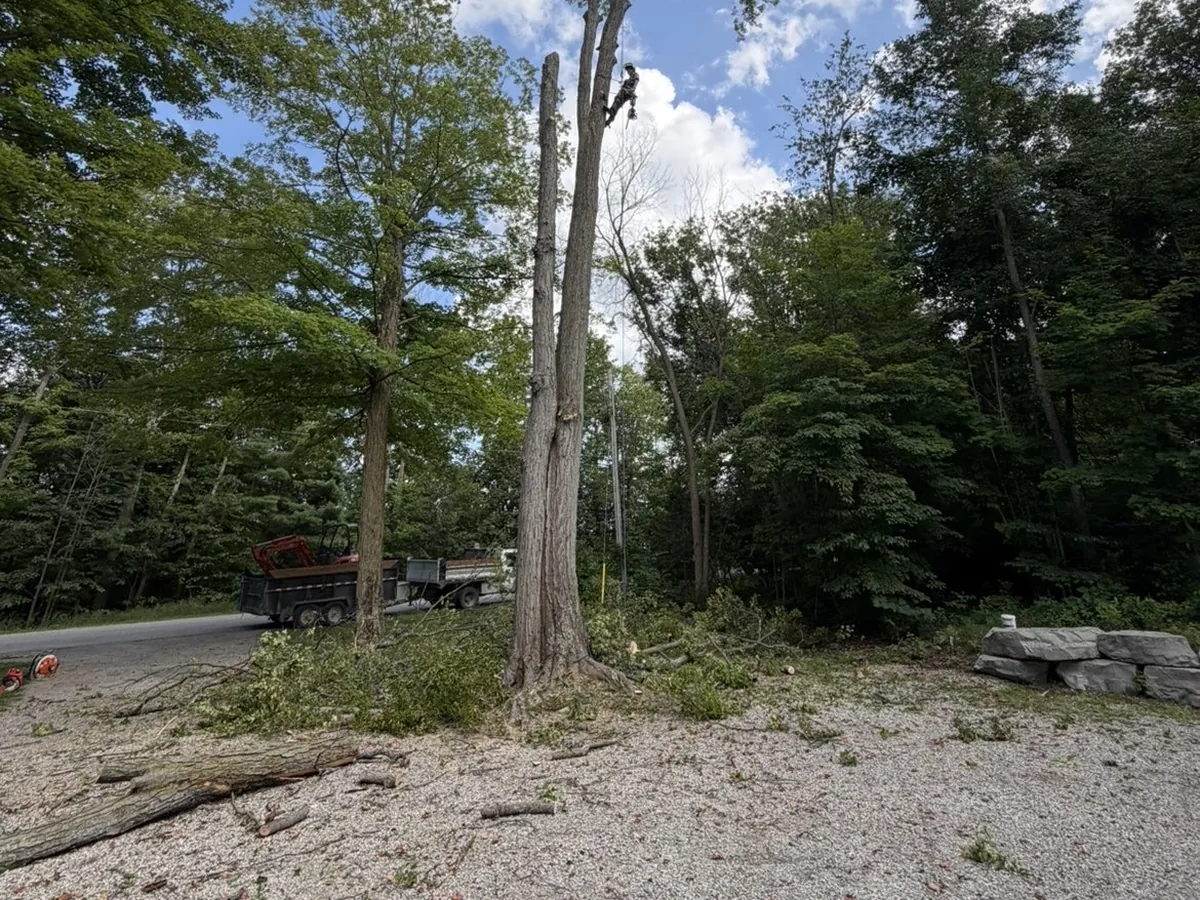
Every cut is made just outside the branch collar so the tree can seal it. We never remove more than about a quarter of a healthy crown in a season. Climbers use ropes and saddles, not spikes, on any tree that is staying, because spike wounds invite decay. And you should not be able to tell where we cut from across the yard, only that the tree looks better.